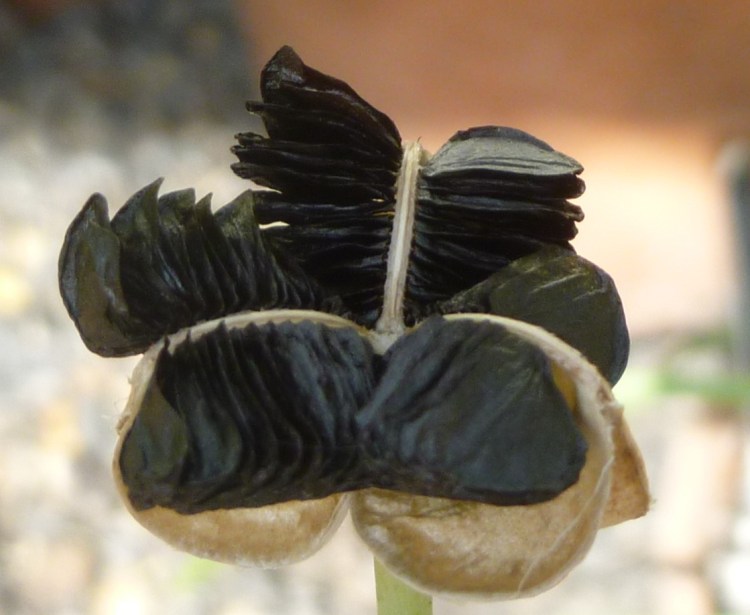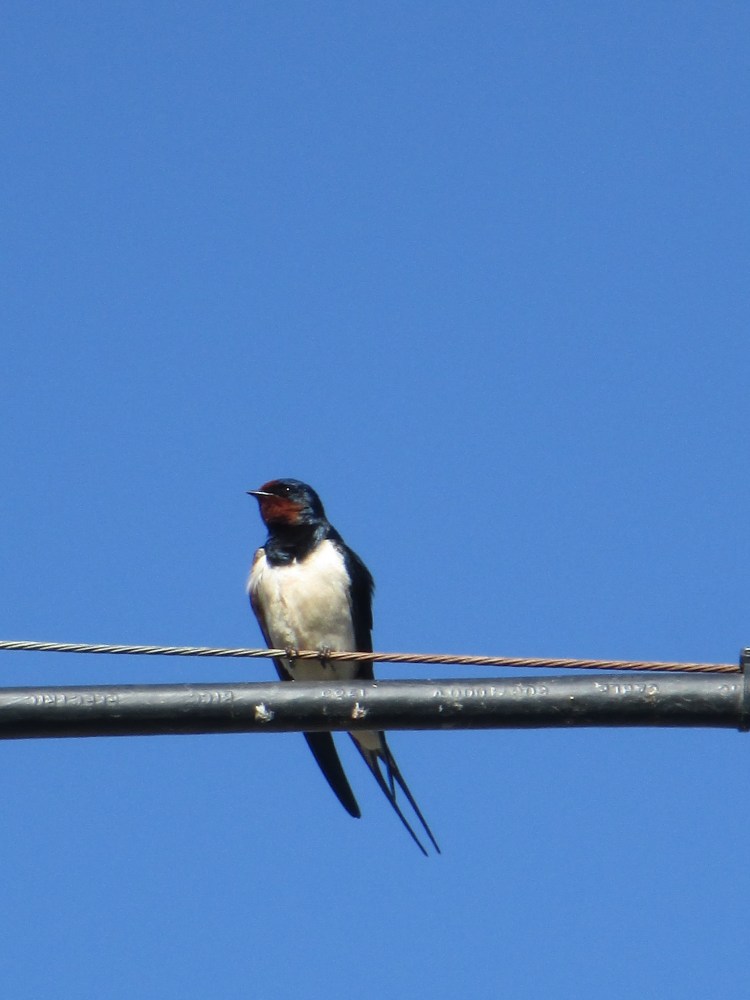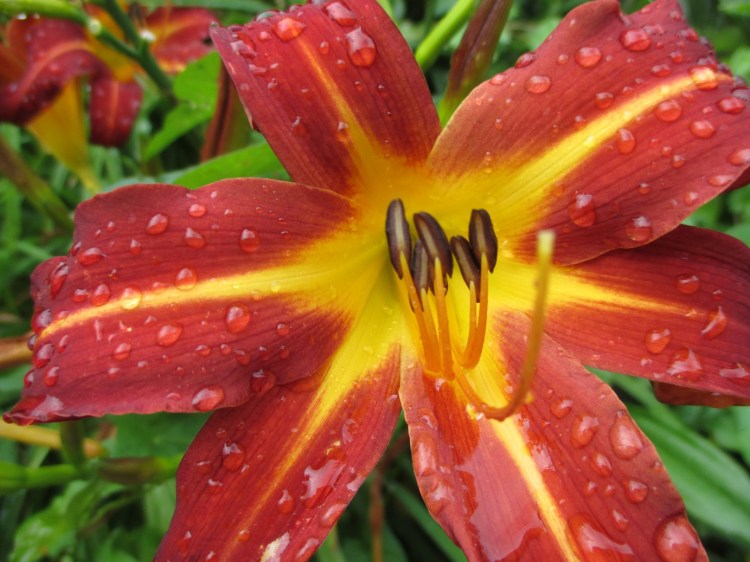
Marwood Hill Gardens in April. A photograph of camassia. Who is that I spy hovering in between the blooms? Zoom in to find this little fella. This is not the first time I have re-examined shots and found more than I first imagined. This is a good thing. The picture that just keeps giving.
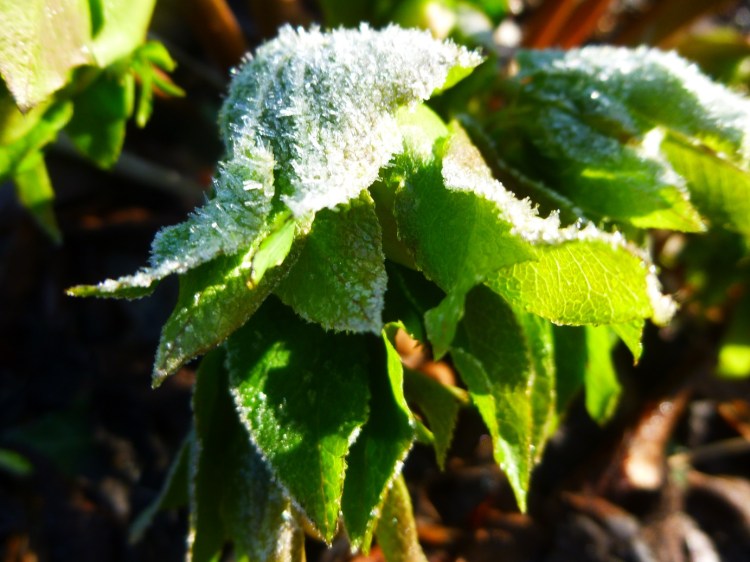
GPAP – Frosty the Hellebore
This photo was taken last January in Spotty Dotty’s garden. The emerging hellebore has been caught by frost, its back crystalline with cold. But these are tough customers and it shrugged it off in the lukewarm winter sunshine. In the weeks that followed we enjoyed a plethora of double white flowers, which later freely seeded under its petticoats. Another lovely memory.
GPAP – Metal Roses
Today I have been working hard an article that I am writing about Broomhill Sculpture Gardens for Devon Life magazine. Whilst sorting through the photos I found this picture of a favourite of mine. I’m afraid I can’t tell you who it is by or what it is called. I can tell you that it is made from old road signs, is shaped like a cast off crinoline and decorated with flowers. Some of these blooms are draped in lichen, an addition made not by the artist but by Mother Nature. I wonder if whoever fashioned this work envisaged this soft green addition to their metallic masterpiece.
GPAP and there’s more ….
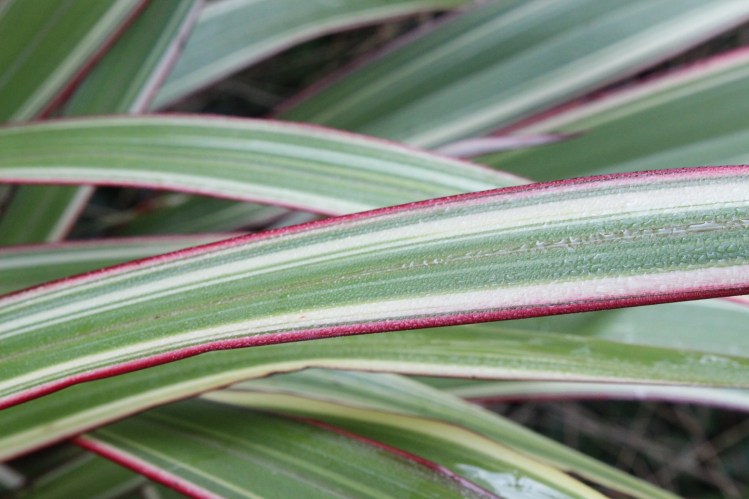
You could be forgiven for thinking that I had painted the thin cerise lines down each side of this phormium’s gloriously strappy leaves. Then you would remember that if I had attempted the job it wouldn’t be half as neat, so beautifully applied, so perfectly framing the stripes of green and cream. This plant was given to me by a lady in Bristol who had grown it from seed and I often wonder if the other seedling grew up to be so fine. Then it was barely out of nappies, now it has grown into a stunning specimen. For all this, I must admit that I rarely look at it for most of the year. This is in part due to chronic ostrich-itis; it is desperate for re-potting and rather than spend 15 minutes doing just that I would rather spend six months averting my eyes. But it is for the main because it is now, in the depths of winter, that it really comes into its own.
GPAP Revisited
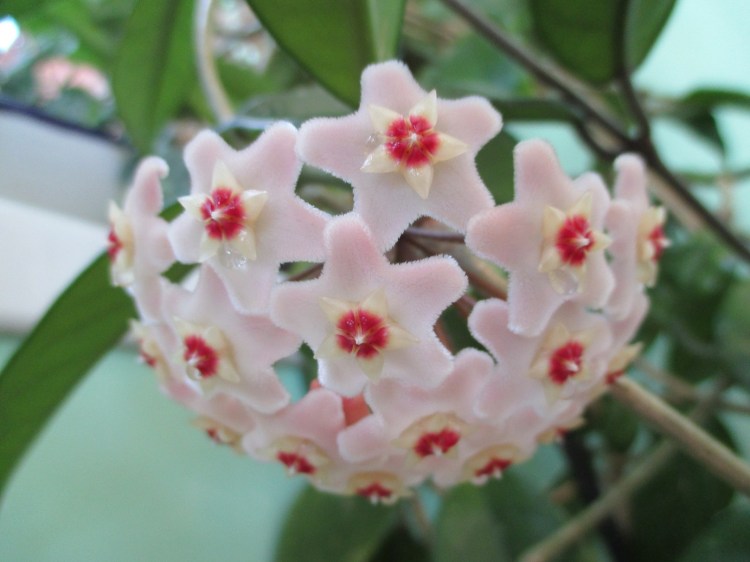
It is always the same. I start a task with great gusto and then gradually the enthusiasm fades. What makes this far worse is that I shout about all the wonderful things I am going to do and then I have to confess that I was distracted. So here goes, the Great Photo Archive Project has slipped behind schedule. In truth there wasn’t actually a schedule so in that respect I am blameless. Perhaps I am being a little soft on myself. I did say I was going to finish it before I go back to gardening in February. This milestone has stopped creeping up on me and now broken into a gallop. A little discipline is needed, it is time to knuckle down and have another look at what went before. With only a slight sigh, and an unnatural urge to clean the oven, I have worked my way through another few files. Which was quite lucky as on my travails I have found another photo for you to enjoy. This is Hoya carnosa, the porcelainflower, belonging to the lovely Lavinia and Lionel. Even little old me, with my dreadful sense of smell, was intoxicated with the heady scent that filled their conservatory when these nectar dripping flowers were blooming. What is more Lav gave me a cutting so I could share the joy. Lucky, lucky me!
Prostanthera incisa – Cut Leaf Mint Bush
Away Day – Knightshayes Court
Yesterday was an All Horts day trip to the National Trust property Knightshayes Court, which is not far from Tiverton in Devon. To be more accurate “All” didn’t turn up, it was Three Horts and a friend, but no matter, we still had fun. It had after all been cobbled together at short notice, January is a funny month and these factors combined with no one likes me, resulted in a skeleton crew. Knighthayes is a Victorian gothic revival manor house, awarded a Grade 1 listing in 1973, one hundred years after it was completed in 1873. And a handsome sight it is, replete with sculptures of mythic creatures, turrets and lancet windows. Lovely as it looked we weren’t there for the architecture, we were there for the extensive gardens.
Due to the recent deluges some of the paths were closed, but this made little if any difference to our enjoyment (and probably a big difference to our boots!). Our guide was a rather beautiful cat named (by us) Sidney (Sidders to his mates).
He was a charming companion until he rushed off to some important mouse meeting or suchlike.
The Paved Garden imprisons standard-pruned wisteria, yet to transform into spring belles with ball gowns dripping in amethyst, all the same stunning in their gnarled beauty.
The Pool Garden magical with enchanting willow sculptures.
Immaculate topiary and yew hedges, hounds bounding after the fox they will never catch.
The woodland full of the unusual and the dramatic including this orange peel witch hazel.
The formal borders still boasting flowering abuliton and fuchsia.
The walled garden, cornered by fairytale turrets and the possessor of the finest soil this side of Christendom, it was all I could do to stop MM rolling around in it.
All this and still the chat was relentless.
As we drove romantically into the glorious sunset I mulled over our day. We had arrived the moment Knightshayes opened its doors and left as it was closing (we may have been pushed a little). We walked all day with every footstep a joy, every corner a surprise and some heritage red flowered broad beans were purchased. There were three visits to the cafe, several to the lavatory …… sorry, what? too much information? OK. Well, put it this way, we made full use of all the facilities. And we met a very nice man called Lewis.
Thank you to my friends Hero, Mad Mary and Torrington Tina for making this a wonderful day. Here is to the next one!
Mystery of the Goose Barnacles
Today was what outdoor, stuff and nonsense types would call “a tad bracing”. It was what I would bloomin’ freezing but mercifully dry. So this made it the kind of day especially invented for a brisk stroll on the beach wrapped up like a plum pudding. All of this was undertaken on the strict proviso that a hot bowl of soup and a sandwich would be the reward. Not, however, until it had been earned. The wind blew us up towards Putsborough and acted like an icy buffer on the way home, cultivating rosy cheeks and a good appetite. Dogs ran for balls and just for the hell of it, the flighty gulls paddled and watched the kitesurfers soaring to the skies.
All very fine and non-mysterious. There was however something curious afoot. Along the way there were a diverse assortment of objects, all covered in the equally bizarre creature that is known as the goose barnacle.
There were an assortment of buoys.
Bottles, both plastic and glass
A long piece of slate, looking like a maritime chainsaw.
A valentine in polystyrene, I would have preferred chocolate but beggars can’t be choosers.
and many other bits and bobs.
The tide was on the turn and they were arranged at intervals along the high water line. Some of barnacles were alive, Medusa like necks searching for the water they filter feed from. Where had they come from? These crustaceans are considered a great delicacy in Northern Spain where they can fetch high prices and men risk their lives on the rocky water’s edge to harvest them. One of the floats was stamped with the words Plasticos de Galicia. Due to my extensive travels and in depth knowledge of the Iberian peninsula I ascertained from this that it was made in the north west corner of Spain. Admittedly it helped that it had Made in Spain written on it.
But I digress, we are no closer to solving this mystery. How did such an obscure collection come to be deposited along a beach in North Devon? Any ideas would be much appreciated.
ps A few goose barnacle facts for you:
- These creatures live on exposed coasts where they depend on the movement of the sea to feed on the plankton they depend on.
- Their name derives from the fact that they were thought to be the eggs of the barnacle goose. Before we had caught on to bird migration, no one had ever seen a barnacle goose nesting. When they saw these long-necked water-lovers emerging from egg shaped shells it all seem very obvious!
- They have populated the oceans for approximately 500 million years, homo sapiens (laughably Wise Man) have been around about 200,000 years. In comparison we are just a load of blow-ins!
More GPAP – Buzz
GPAP Again – The View
One morning last September, travelling to work on the grand estate of the dishonourable Lord and Lady Mantle, I pulled over to the side of the road and took this picture. Seeing it again reminds me of how lucky I am. In many ways. I hope I never take it for granted. If I ever do, I give you full permission to kick me in the shin. Not too hard though.