
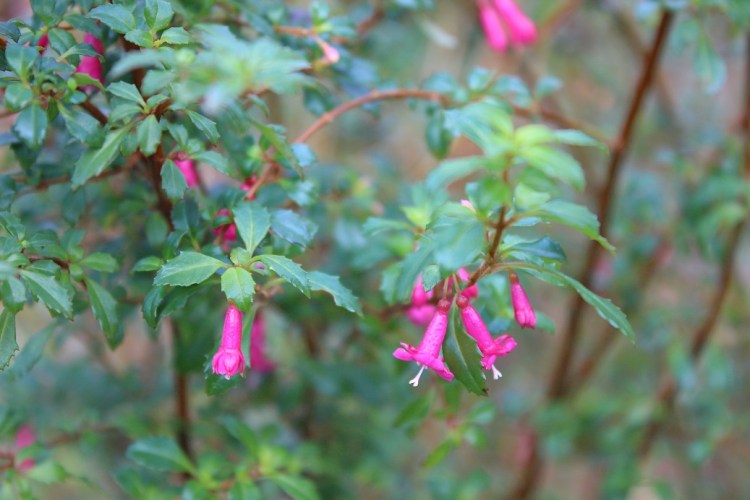
Today I visited Kay and Al at Atlantic Botanic nursery and this little beauty caught my eye. Yet another one for the Lust List!
Today I visited Kay and Al at Atlantic Botanic nursery and this little beauty caught my eye. Yet another one for the Lust List!
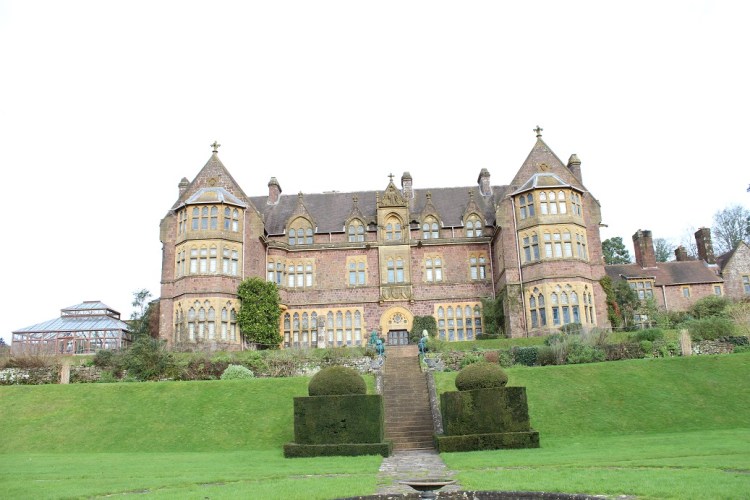
Yesterday was an All Horts day trip to the National Trust property Knightshayes Court, which is not far from Tiverton in Devon. To be more accurate “All” didn’t turn up, it was Three Horts and a friend, but no matter, we still had fun. It had after all been cobbled together at short notice, January is a funny month and these factors combined with no one likes me, resulted in a skeleton crew. Knighthayes is a Victorian gothic revival manor house, awarded a Grade 1 listing in 1973, one hundred years after it was completed in 1873. And a handsome sight it is, replete with sculptures of mythic creatures, turrets and lancet windows. Lovely as it looked we weren’t there for the architecture, we were there for the extensive gardens.
Due to the recent deluges some of the paths were closed, but this made little if any difference to our enjoyment (and probably a big difference to our boots!). Our guide was a rather beautiful cat named (by us) Sidney (Sidders to his mates).
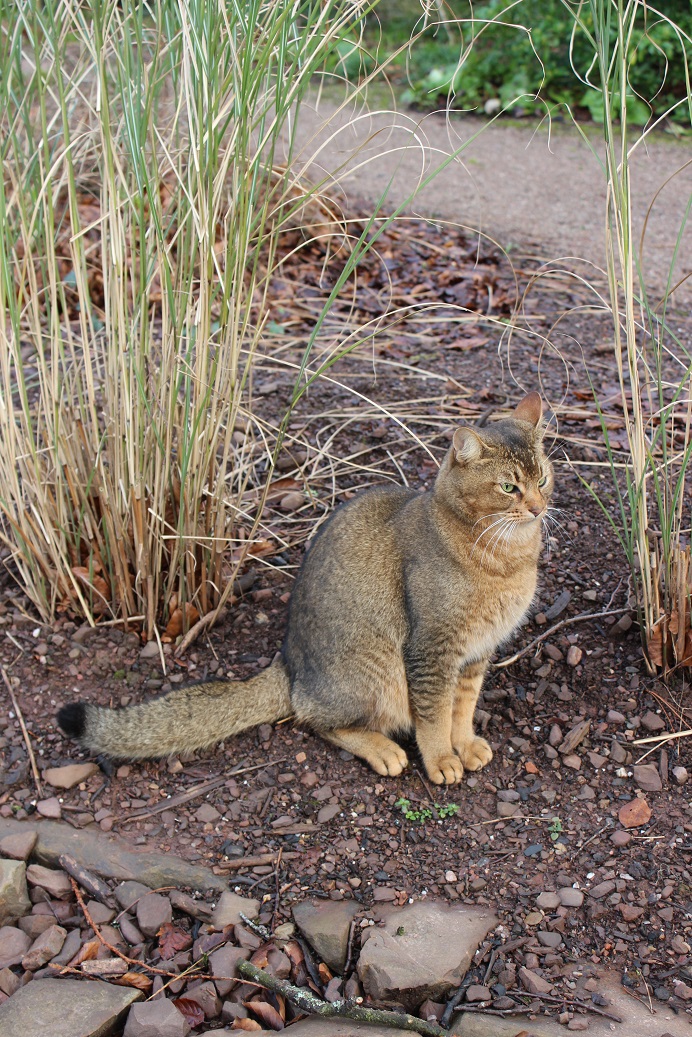
He was a charming companion until he rushed off to some important mouse meeting or suchlike.
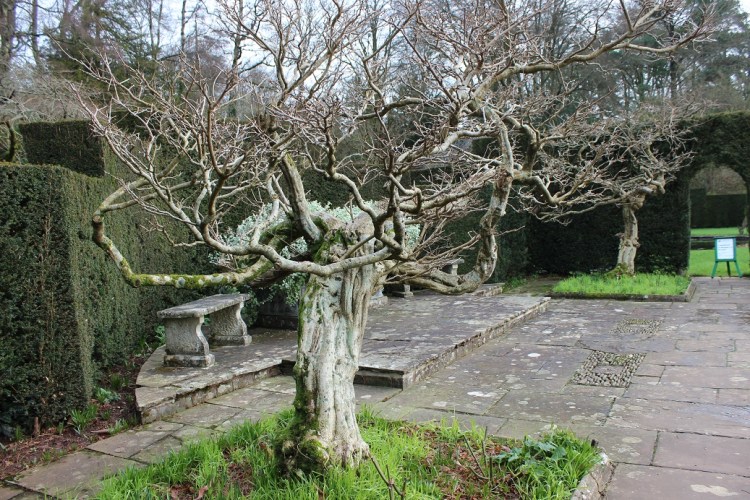
The Paved Garden imprisons standard-pruned wisteria, yet to transform into spring belles with ball gowns dripping in amethyst, all the same stunning in their gnarled beauty.
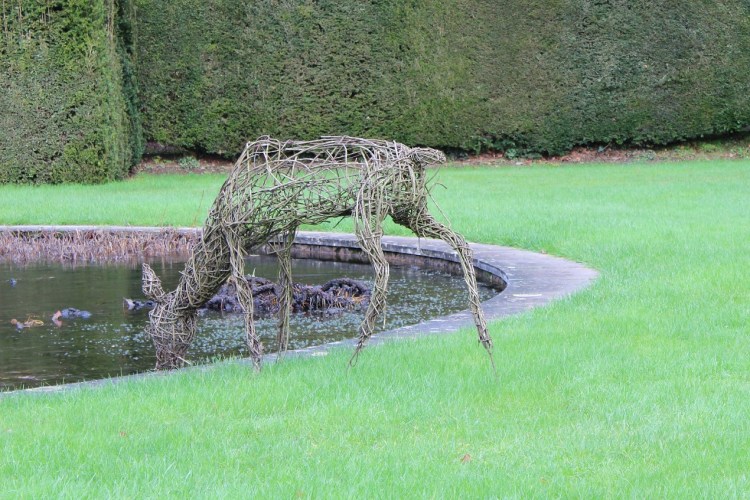
The Pool Garden magical with enchanting willow sculptures.
Immaculate topiary and yew hedges, hounds bounding after the fox they will never catch.

The woodland full of the unusual and the dramatic including this orange peel witch hazel.

The formal borders still boasting flowering abuliton and fuchsia.
The walled garden, cornered by fairytale turrets and the possessor of the finest soil this side of Christendom, it was all I could do to stop MM rolling around in it.
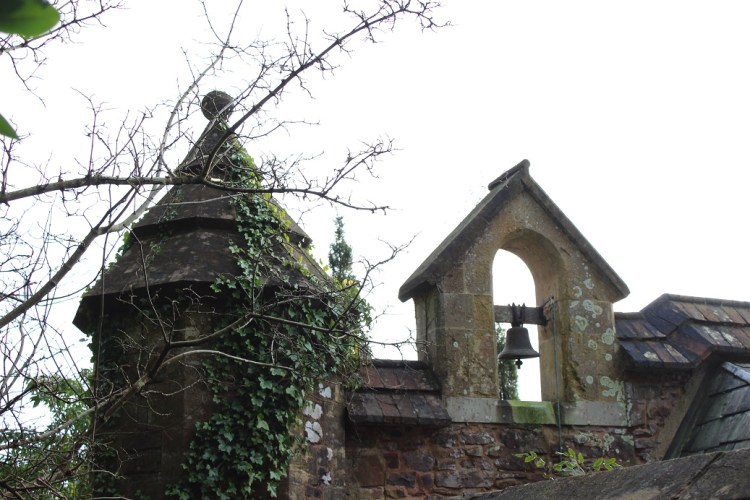
All this and still the chat was relentless.
As we drove romantically into the glorious sunset I mulled over our day. We had arrived the moment Knightshayes opened its doors and left as it was closing (we may have been pushed a little). We walked all day with every footstep a joy, every corner a surprise and some heritage red flowered broad beans were purchased. There were three visits to the cafe, several to the lavatory …… sorry, what? too much information? OK. Well, put it this way, we made full use of all the facilities. And we met a very nice man called Lewis.
Thank you to my friends Hero, Mad Mary and Torrington Tina for making this a wonderful day. Here is to the next one!
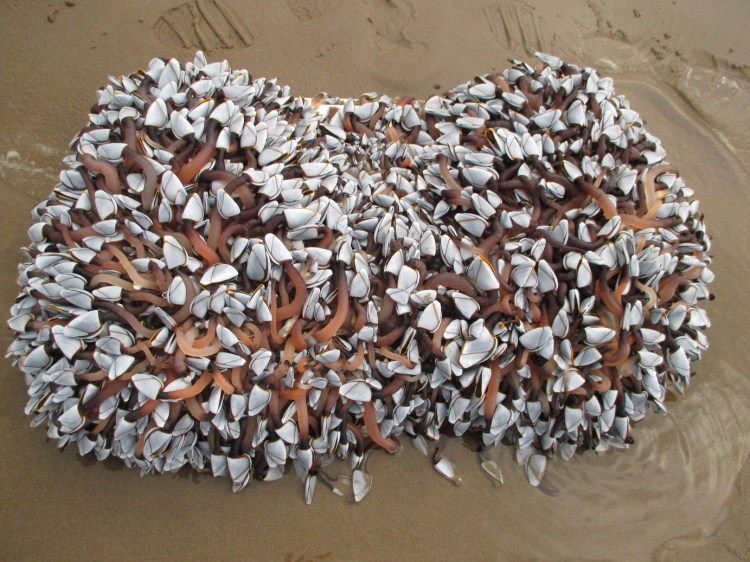
Today was what outdoor, stuff and nonsense types would call “a tad bracing”. It was what I would bloomin’ freezing but mercifully dry. So this made it the kind of day especially invented for a brisk stroll on the beach wrapped up like a plum pudding. All of this was undertaken on the strict proviso that a hot bowl of soup and a sandwich would be the reward. Not, however, until it had been earned. The wind blew us up towards Putsborough and acted like an icy buffer on the way home, cultivating rosy cheeks and a good appetite. Dogs ran for balls and just for the hell of it, the flighty gulls paddled and watched the kitesurfers soaring to the skies.
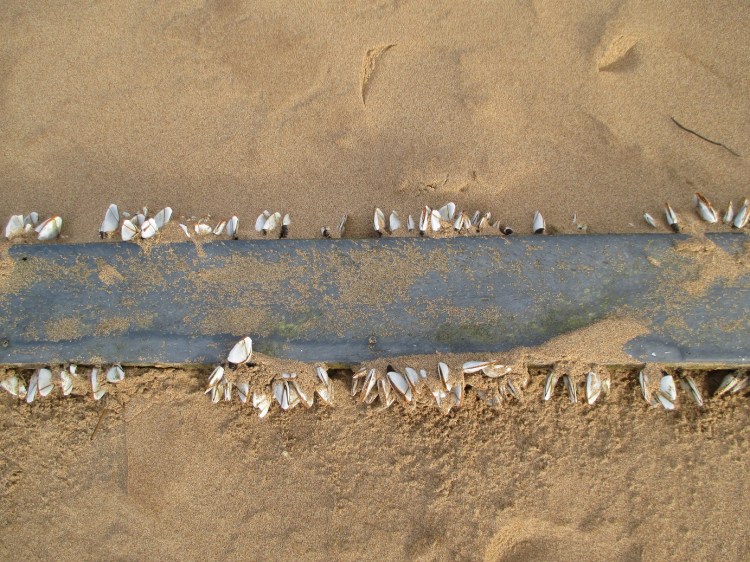
All very fine and non-mysterious. There was however something curious afoot. Along the way there were a diverse assortment of objects, all covered in the equally bizarre creature that is known as the goose barnacle.
There were an assortment of buoys.
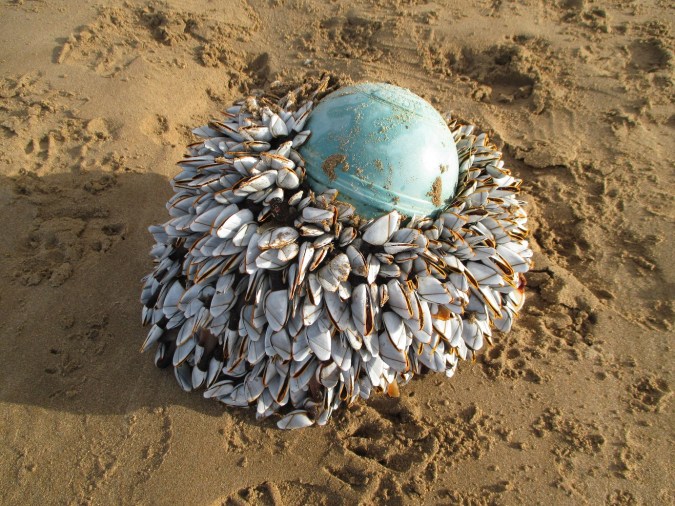
Bottles, both plastic and glass

A long piece of slate, looking like a maritime chainsaw.
A valentine in polystyrene, I would have preferred chocolate but beggars can’t be choosers.

and many other bits and bobs.
The tide was on the turn and they were arranged at intervals along the high water line. Some of barnacles were alive, Medusa like necks searching for the water they filter feed from. Where had they come from? These crustaceans are considered a great delicacy in Northern Spain where they can fetch high prices and men risk their lives on the rocky water’s edge to harvest them. One of the floats was stamped with the words Plasticos de Galicia. Due to my extensive travels and in depth knowledge of the Iberian peninsula I ascertained from this that it was made in the north west corner of Spain. Admittedly it helped that it had Made in Spain written on it.
But I digress, we are no closer to solving this mystery. How did such an obscure collection come to be deposited along a beach in North Devon? Any ideas would be much appreciated.
ps A few goose barnacle facts for you:
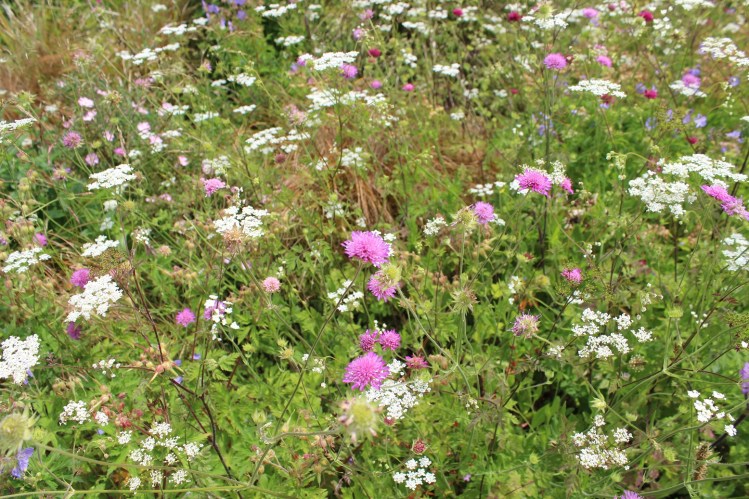
This photo was taken in June at the wonderful Holbrook Garden. You can almost hear the gentle buzz of bee and hum of hoverflies.

One morning last September, travelling to work on the grand estate of the dishonourable Lord and Lady Mantle, I pulled over to the side of the road and took this picture. Seeing it again reminds me of how lucky I am. In many ways. I hope I never take it for granted. If I ever do, I give you full permission to kick me in the shin. Not too hard though.

I have heard many people gasp at the mention of Lily of the Valley, declaring that it is their all time favourite flower. Although I admire its delicate beauty and abundance I have never quite understood this enthusiasm. I imagined this attachment was merely sentimental, the nodding ivory bells evoking memories of a mother’s cherished bloom, a bridal bouquet, a childhood posy. Then I recalled my gross failing in the appreciation of this world, a missing dimension in my life, a chasm, a void. I am talking about my, at best, meagre sense of smell. When perfumes fleetingly return it is often shocking, over-whelming and physical in its intensity. It is rather like being hit in the face by a football, not an altogether pleasant experience. Furthermore, whilst in the olfactory wilderness I forget what smells are, my ability to identify one from another. So on these lucid days I walk around with a scrunched up face saying “what is that strange smell?” only to be told with puzzled tone “petrol” or “coffee” or “chips”. I can only guess that the (allegedly) sweetly scented Convallaria majalis, that admirably carpets our woodlands and shady garden corners in spring, has one hell of a scent!
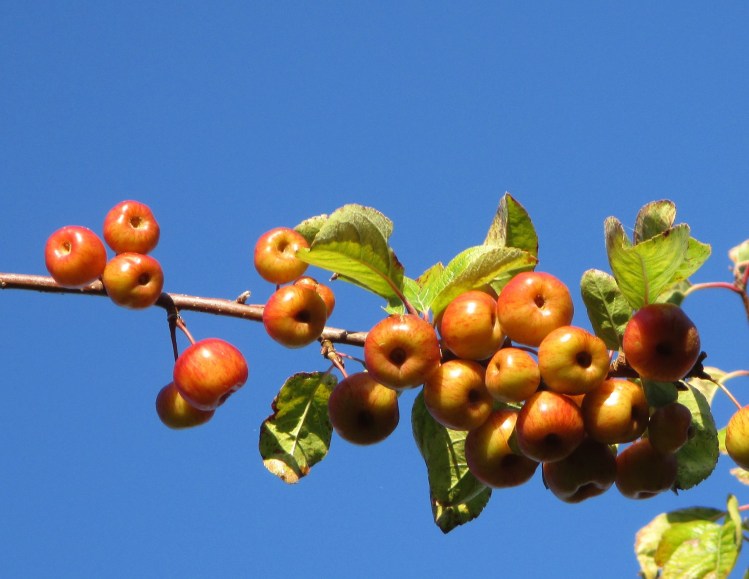
If there was a Desert Island Discs for trees (unlikely) and I was ever invited to be a guest on the programme (the odds are lengthening now) the crab apple would definitely be one of my chosen. Unbeatable blossom, fruit that is both beautiful and delicious (with a little culinary assistance), fine autumn colour and friend to the wildlife. Ask me a tricky one!

Taking up the mantle of your horticultural physician, and in an attempt to cure your January Blues, I prescribe one Caltha palustris to be admired three times a day. This should be repeated until the symptoms disappear. Then once more for luck, you can never be too careful with maladies of such fortitude.
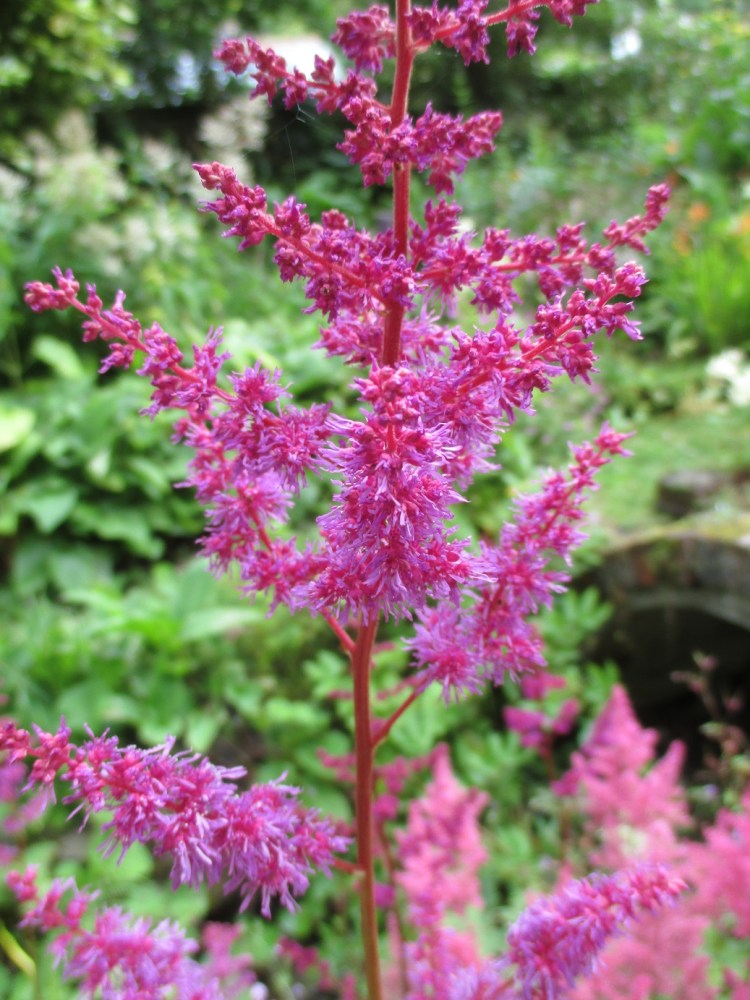
A click here and a click there and suddenly it is June and and the rodgersias are flowering!
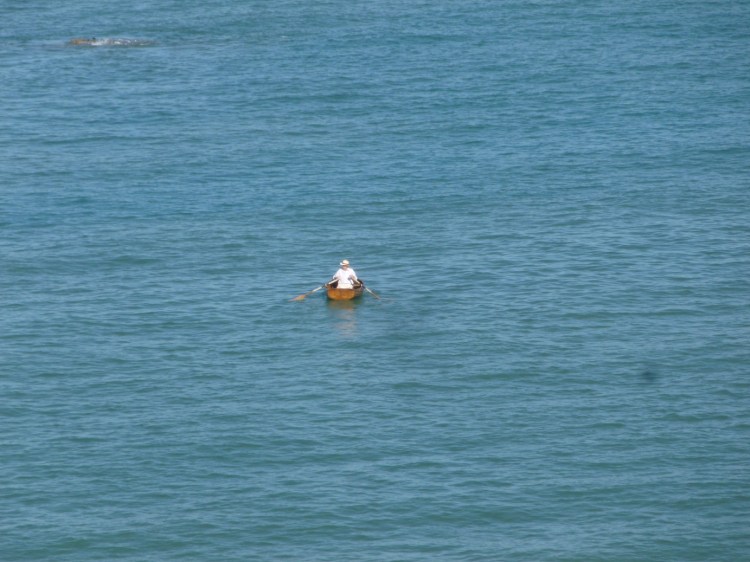
Forgive me, today’s dip into the archive is singularly lacking in pretty flowers. In my defence I was gardening when I took this picture, no doubt doing some of my “deep thinking” whilst gazing Wales-ward on this bright October day. I spotted Peter, an elegant and intriguing gentleman who lives in the lime washed cottage by the sea wall, rowing out to sea in his ancient clinker built row-boat. In years past this was a bustling harbour and tourists were brought around the coast from nearby Ilfracombe, by men with salt water in their veins. Here they would enjoy the many tea rooms, the view and a paddle until they were returned at the end of the day. There are not many boats in the bay nowadays, ubiquitous kayaks and the odd annoying jet-ski, but few true boats. Peter would not have looked out-of-place in the roaring 1930’s, dapper in his whites and Panama hat. Unaware he was being observed, using the strong easy strokes of someone who has rowed for fifty years, he headed purposefully to nowhere in particular. His joy was being on the water in his trusty vessel, embraced by the sea. I was envious then and, looking at this photo again, I am envious once more.

 Off The Edge Gardening