 My day summed up in a photograph.
The twig with a suspended water droplet symbolises my nose. The weather was so damp I am now covered in a healthy layer of lichen.
I may have forgotten my hanky, but least I am perceptibly pollution free.
My day summed up in a photograph.
The twig with a suspended water droplet symbolises my nose. The weather was so damp I am now covered in a healthy layer of lichen.
I may have forgotten my hanky, but least I am perceptibly pollution free.
 Another day, another adversary. This time I came across an old foe, Houttuynia cordata or the heart leaved Houttynia. If I was Sherlock Holmes it would be my Moriarty. It is an awkward customer from the start, having an unpronounceable name (for me and I have tried honest), I prefer to call it “that darned rootin tootin nightmare”. If this alone wasn’t enough, the way it invades the borders makes Attila the Hun appear lacking in ambition. So today involved more digging and rooting around like a truffle pig (although I believe they use dogs nowadays but I mustn’t get diverted) in an attempt to remove all the brittle and extensive rhizomes. Of course they will all pop up again in the spring and the lovely Lavinia will wonder exactly what have I been up to!
The photo above is of a well behaved, non invasive, darkly beautiful penstemon. Teacher’s Pet of the Day.
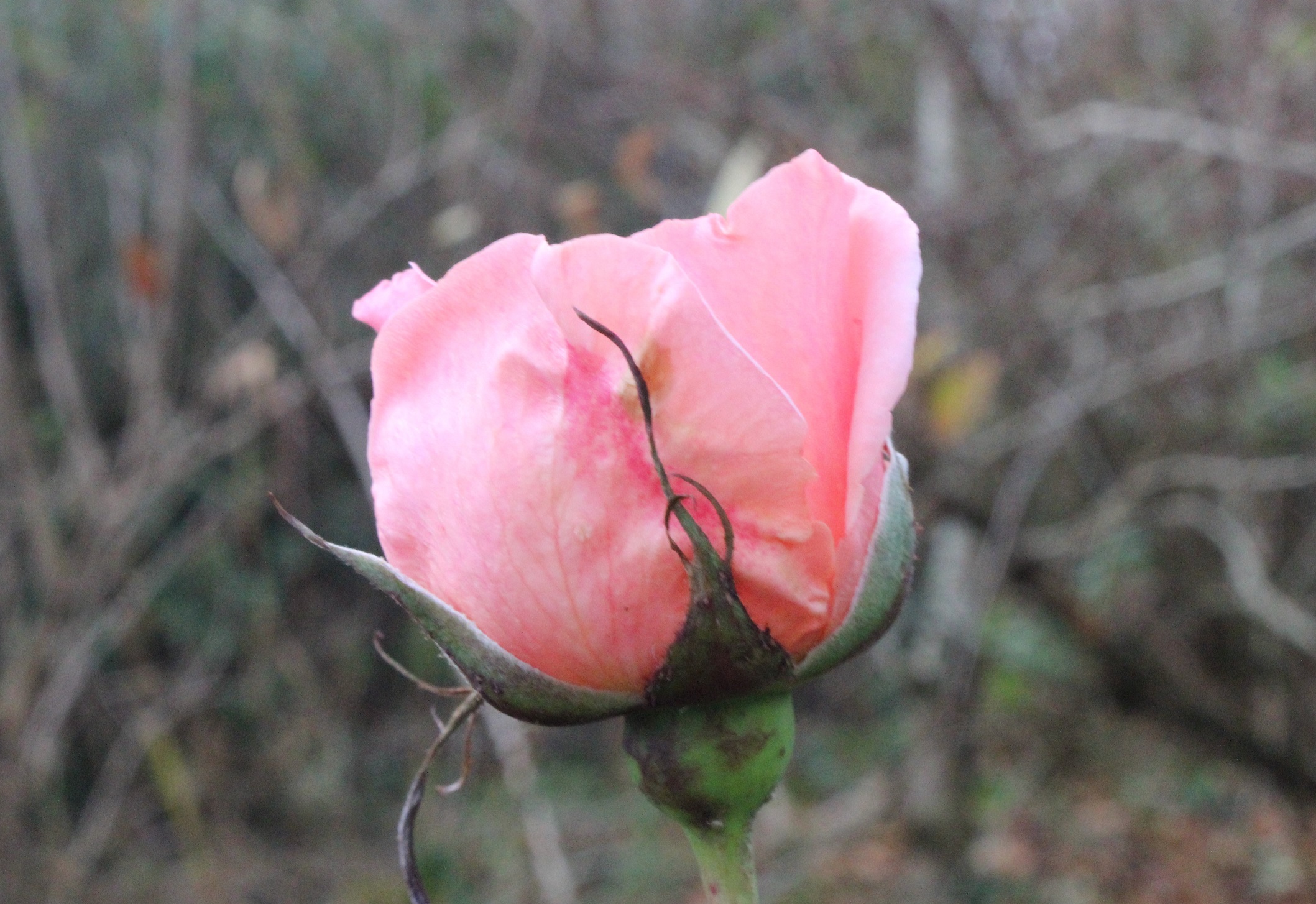 Every year it happens. I go soft. More accurately “softer”. I skip my way through spring, summer and autumn singing tra la las with the odd yodel thrown in, barefoot with flowers in my hair. Then winter does what it has been signed up to do, including such things as “finger numbing frosts” “never arriving but often threatened snow” “doom and darkness” “teeth chattering, leg bending gales”. Of course I know the theory, but it is the physical experience that always comes as a complete shock to me, as if this strange new season had been invented just to spite me. The wind is the worse culprit, it is what George’s dad called “A lazy wind, it can’t be bothered to go around so it goes through you”. It was indeed very lazy. Once out of the inclement elements and back in the snug santuary of home it is nigh on impossible to get warm, “chilled to the bone” as they say. I am not sure of the science of this claim but some evenings as I shiver whilst others melt I envisage my body like a human baked alaska. Next you are inflicted with “glowing cheek syndrome” causing your face to beacon as if you are on your third large sweet sherry martini. Another problem to address is the reluctance to ever ever ever remove your thermals and the associated health issues. The shame is that I know it never gets really cold here, to some our best attempt at severe weather would count as a balmy spring day. So there is no getting away from it, I have once again turned into a fully fledged softie. If previous years are anything to go by I will toughen up quickly, which is just as well as we have only just begun. I thought this little rose, gentle in bud, was feeling the same way as me. It just had that look about it.
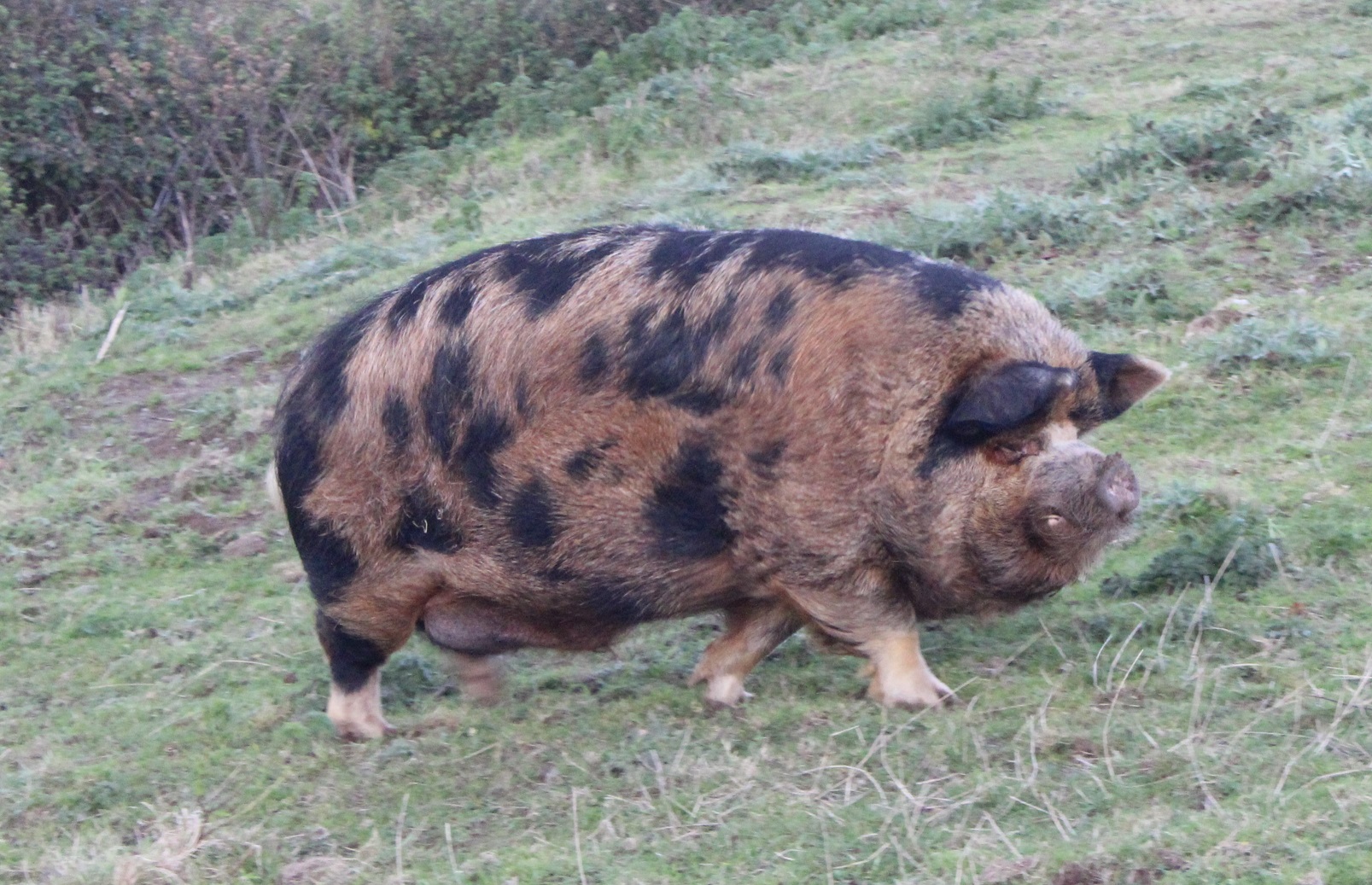 Although it would be quite unfair to have a favourite client I think it is extremely acceptable to have a favourite pig. Let me introduce you to George. He is a kunekune which are native to New Zealand and means fat and round in Maori. His combination of rugged good looks and an endearing personality makes him irresistible. Add to that a slightly dangerous demeanour, a surprising turn of speed (well I was surprised when he turned and sprinted towards me shortly after this photo was taken) and a good line in grunt. The father of seven beautiful piglets with the almost as gorgeous Victoria. He is at present involved in a doomed love triangle with a young sow to be fattened and a slightly bolshie Shetland pony. I will be there to scratch his head and offer words of consolation when it all goes pear-shaped.
 A few months ago I wrote an article extolling the virtues of the aster. Today I spent the morning de-astering a border that had been infested with my favourite late season flower. Me and my big mouth. There was no way around it, each and every stiffled plant had to be dug up and the invasive monster untangled and teased out from roots and crowns. The disinfected were then replanted. There is plenty more to do and this project will keep me out of mischief for several visits. Lunch was pumpkin soup and home-made bread supplied by my last speed date of the week, the lovely Lavinia and Lionel. Still smiling!
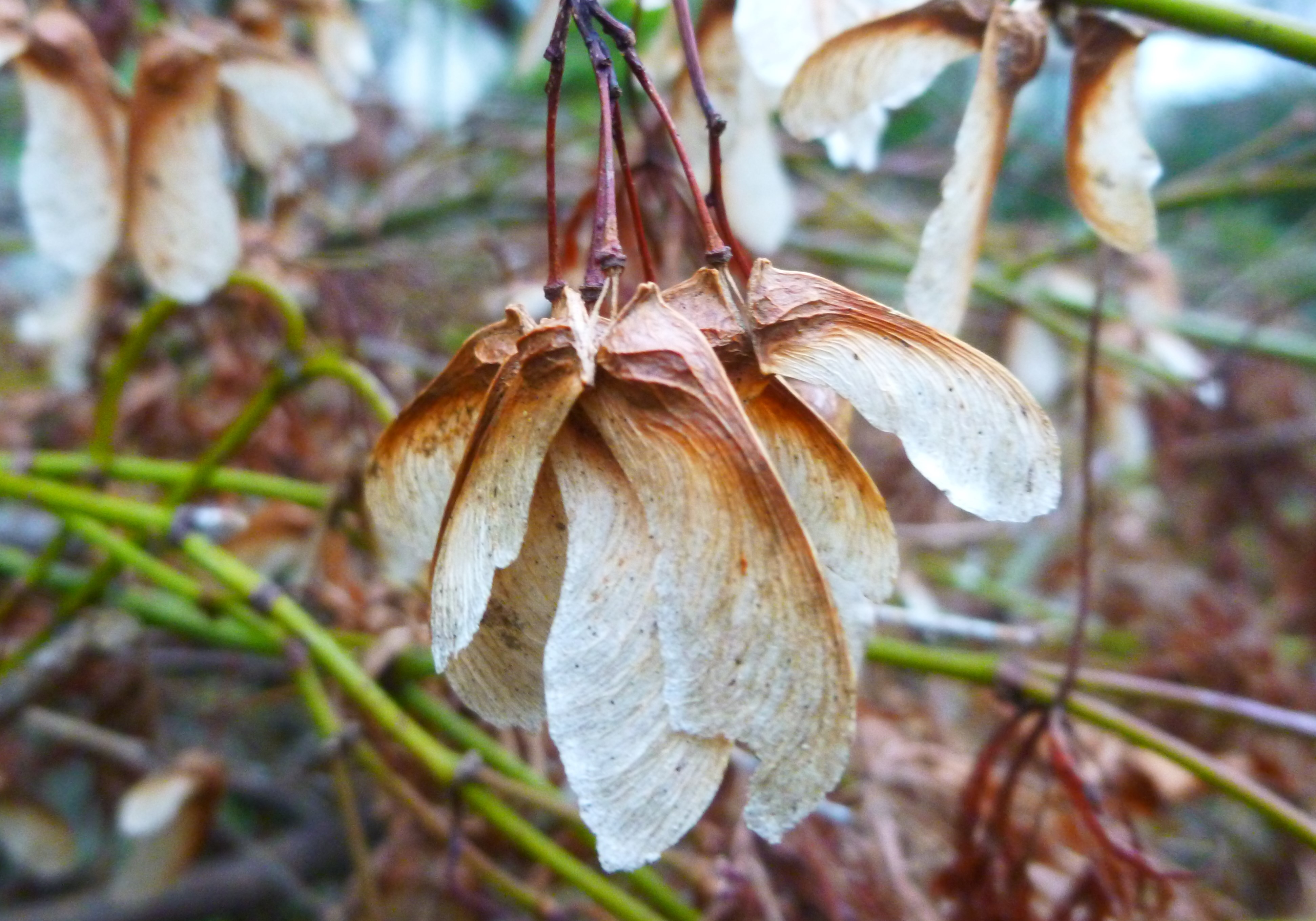
Of course the photo is not of an aster or a strangled plant, it is the helicopter seed of Lavinia’s favourite Japanese Maple.
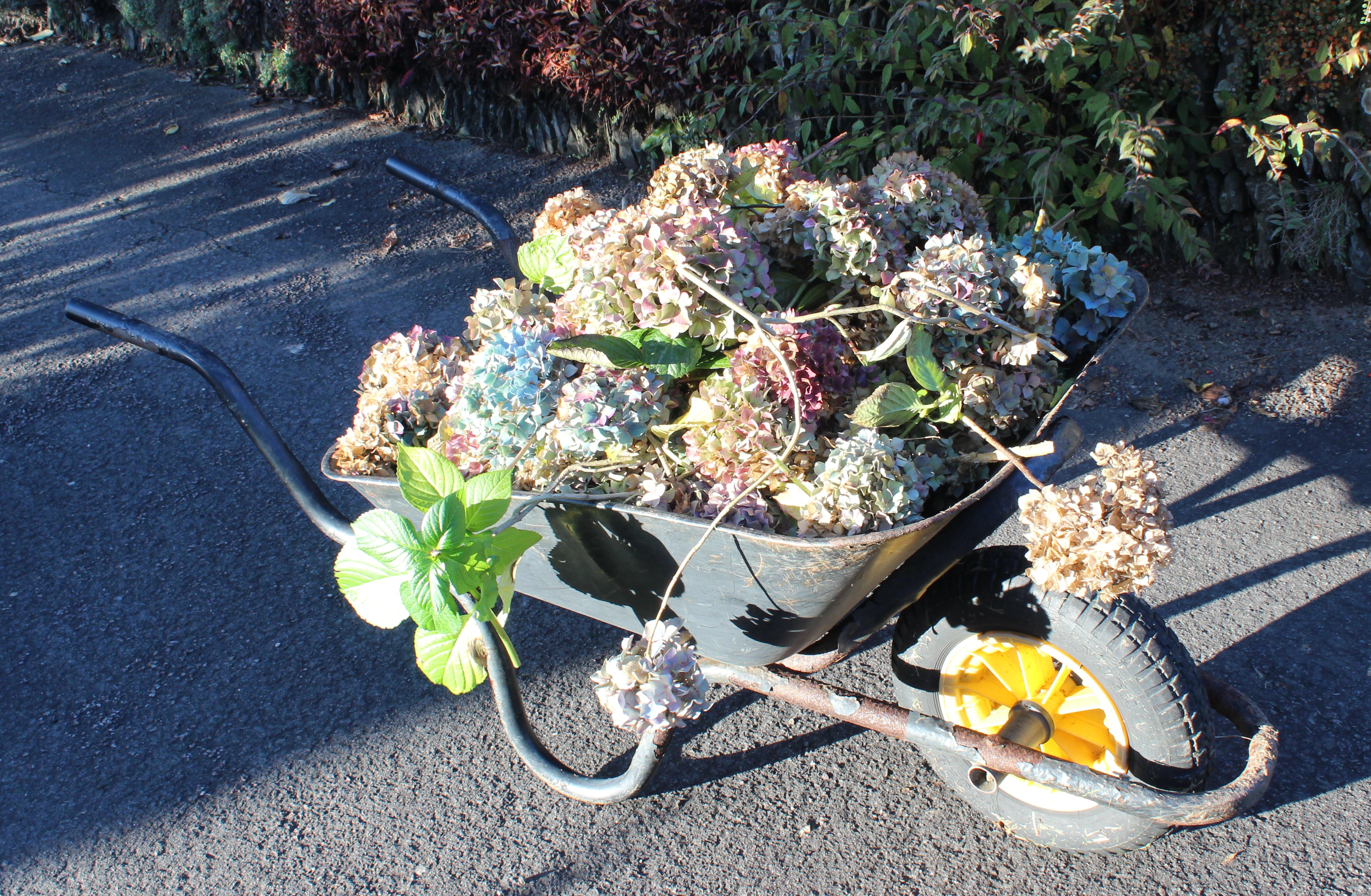 Today I had a wonderful day. I would imagine it is not the norm to enjoy your work to this degree and it seems a little bizarre to call it “gainful employment” when so much fun is involved. It was hard work and chilly, but hard work keeps you warm and interesting gardens and nice people make it easy to work hard. If a day had a check list before it could go into the “wonderful” category, today all the boxes were ticked. Great clients, coffee, adorable dog, rock buns, more lovely clients, more coffee, chocolate biscuits (nobly refused but still appreciated), laughter, good company, driving home whilst the sun set on a perfect winter’s day. Now too tired to tell tales of dodgy tractor driving, hydrangea alleys, rampant jasmine and camera-shy robins, these stories will remain in the archive until needed. So far so brilliant.
 Yesterday was the inaugural day of the second incarnation of The Heavenly Gardener. Self employed again, released into the wild to ply my trade for the unsuspecting public of North Devon. I admit I was a little daunted, after eight years wearing the cosy slippers of Cliffe I wasn’t really sure what my new footwear would be. I was hoping for something comfortable and stylish, perhaps a leopard print ballet pump, but there is every possibility I could end up with a pair of corn-inducing, misfitting white stilettos. The night before was restless, with regular awakenings to check the time and dreams involving past clients, catastrophe and shouting. Do we ever get over that “first day of school” feeling? The dread that no one will like you, you will get lost, you will be exposed as the ignoramus you really are, prey to the sadistic teacher. There is no antidote except to get on and do it, once the first day is over you must move onto the second day. That is a universal truth. There is also no shortcut to nurturing a relationship with the garden’s owner and the garden itself. Usually I can quickly ascertain if I am going to get on with someone, there aren’t many folk that leaved me stumped for something to chat about. I am bilingual, my second language is small talk. However, in order to get the most of out of a garden it is important to get beyond the pleasantries, you must learn its intimate secrets. It is impossible to understand how best to approach your task until the soil has been worked, the resident plants surveyed and the mood assessed. This can take months if not years. As I have got several new gardens to learn it feels a little like speed dating. My initial impressions of yesterday, I rather like this chap and his home.
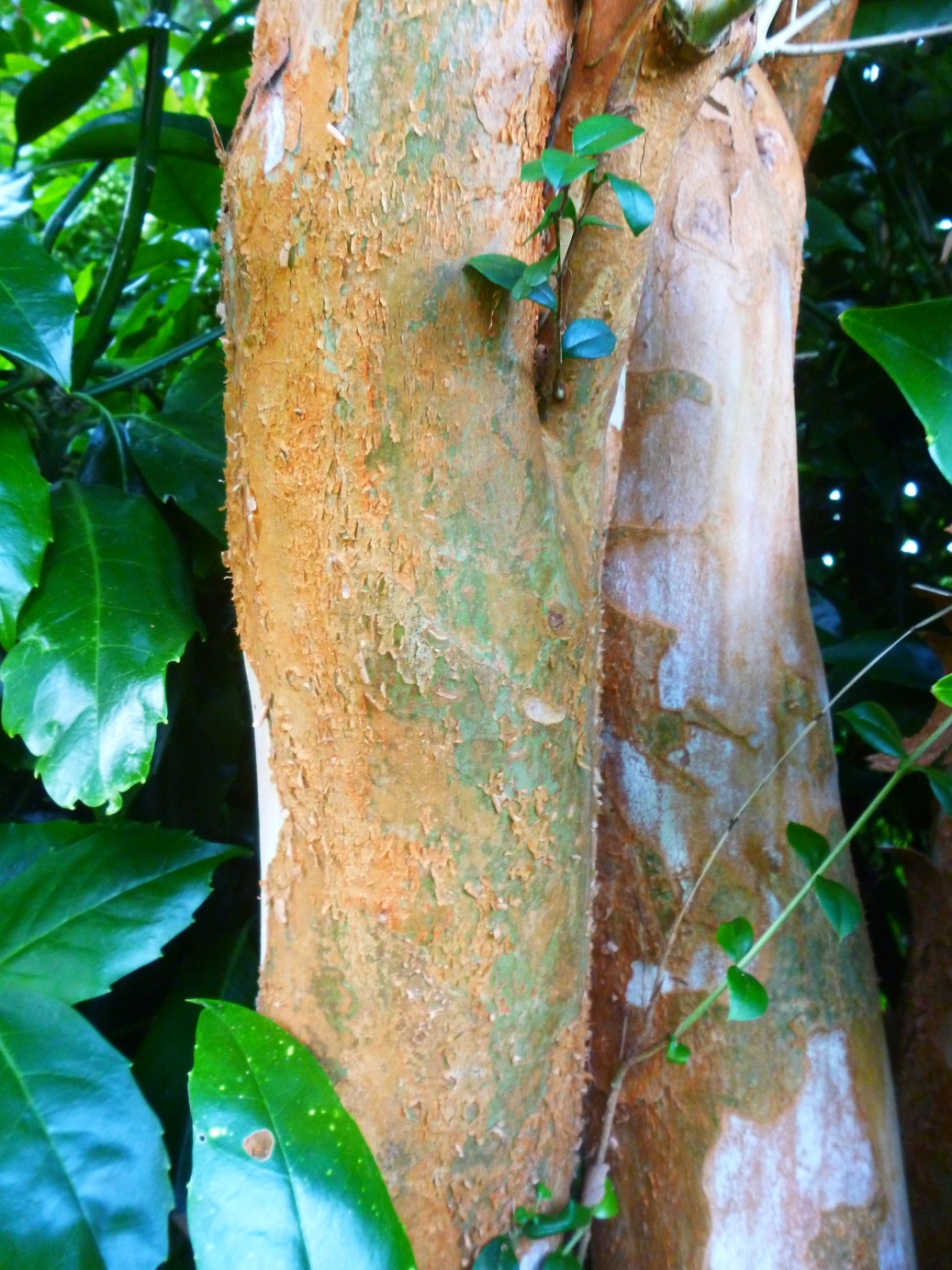 For those of you who live in the UK, it is unlikely to have escaped your notice that this season is an uncommonly long and confused one. Raspberries are flowering as are some rhododendrons, daffodils are up and the country generally seems to think that spring has sprung. Wandering around the bounteous garden at The Roundhouse this morning, there were many late/early bloomers, including hebes, salvias, abutilon and Mexican orange blossom. Undoubtedly it is a welcome bonus to have so much colour so late in the year, but my eye was drawn not to bloom but to the decorative bark of the myrtle. Its peeling skin like layers of cinnamon, talcum powder and green tea. With all this befuddlement I am slightly worried that Father Christmas will get equally disorientated and not turn up!
 Our garden is a disgrace. Sincerely, a disgrace. Not a “fishing for compliments” disgrace but a “hang my head in shame” disgrace. When we bought this house eight years ago it certainly wasn’t for the garden. We had left a narrow but very long garden at our last house which, over the 25 year we lived there, had been transformed from a long narrow nothingness into an extension of myself. It was the place that I discovered my love of, nay obsession with, horticulture. It was my creation, my schoolroom, my solace. Every spare hour of daylight was spent out there and a fair smattering of crepuscular ones. I found a new friend in my equally devoted neighbour and we enjoyed mutual encouragement and mischief. When eventually I walked away I didn’t turn my head, excited by prospects of new projects.
We searched our new home town for many months before we found, and bought, the kind of house I never imagined we would live in. Sea views, large bay windows, period features, all too wonderful for the likes of us. There was one downside to this dream, what lay behind; small, reached by treacherous brick steps, heavy on the hard landscaping, over-generous on the planting, measly with the imported topsoil. It was a compromise but we convinced ourselves that bijou was good, it would make life easier, taking the pressure off. But we have not bonded, me and the new garden, there is no love, no loyalty. I have soothed my hortie itch by working for another, I have lived vicariously through other people’s masterpieces. There is guilt, there have been promises, there have even been short-lived flurries of work. As a wise man once said, perhaps the only answer is to “Rip it up and start again”.
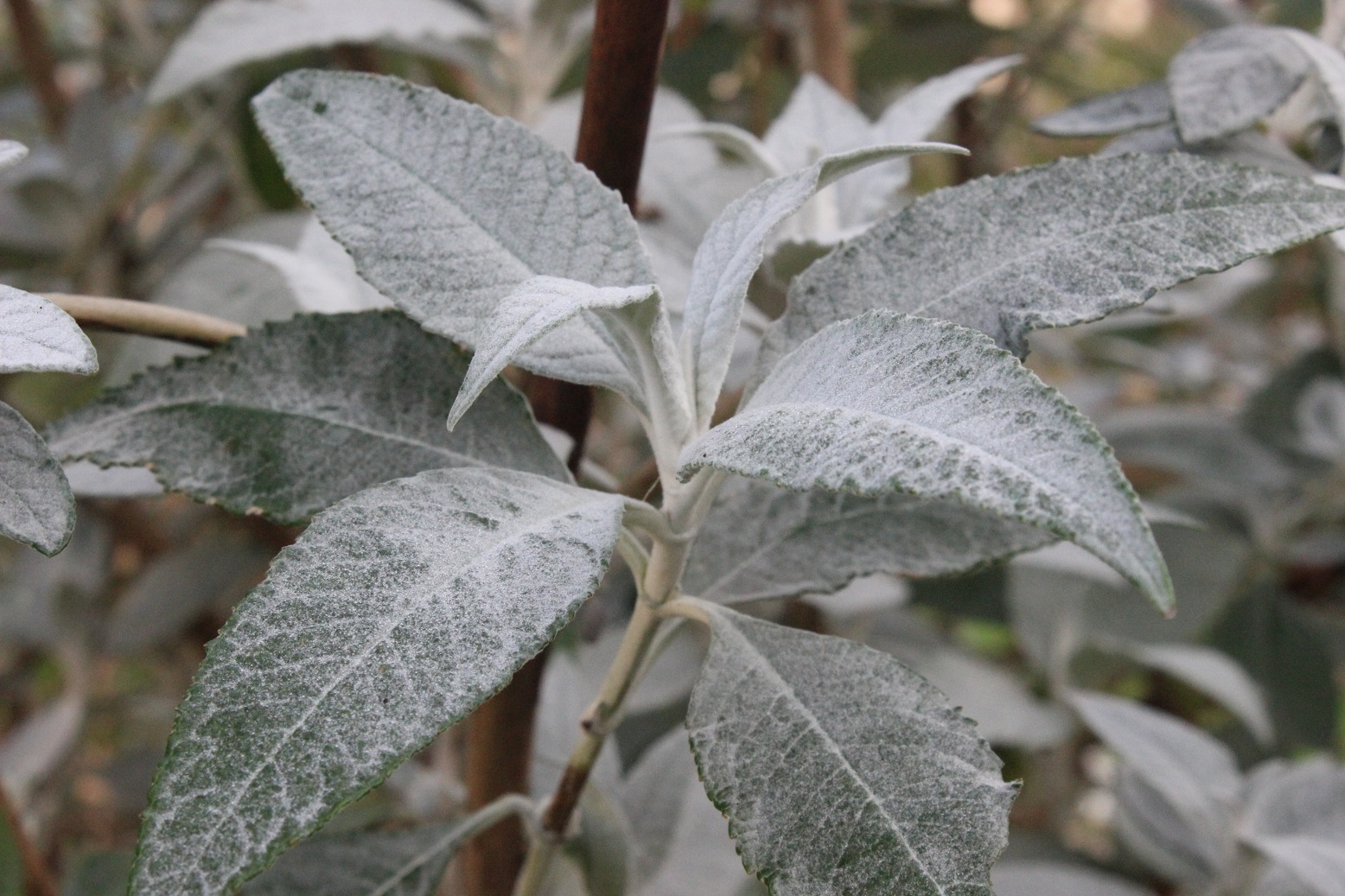
Every piece of wasteland must have a buddleja and we are no exception. Not quite the usual invader of nook and cranny as it is a cultivar planted by the previous owner, probably “Black Knight”. Today its felty, icing sugar-coated leaves mocked me as I once again resolved to sort out this wilderness.
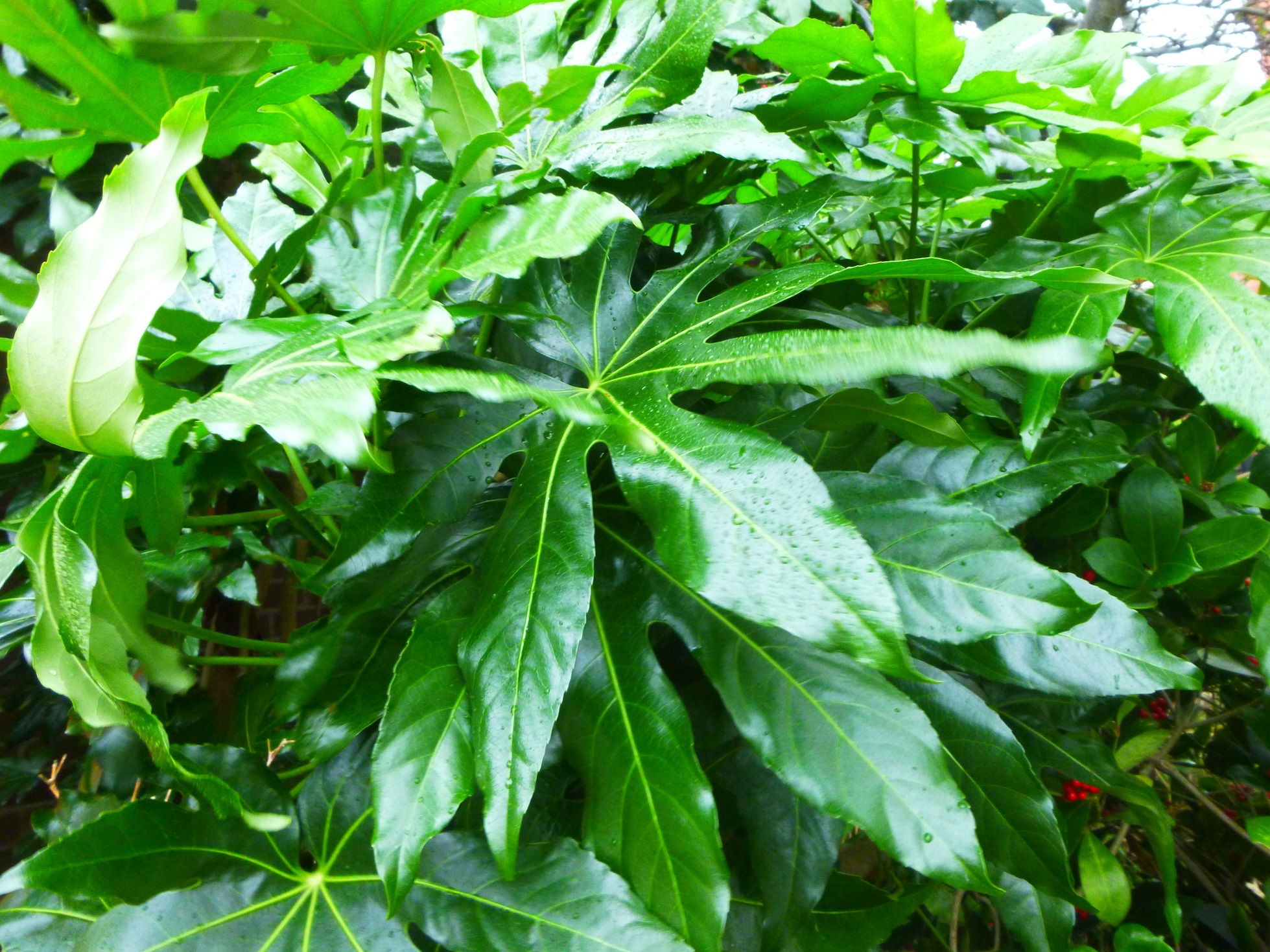 I have never been a great fan of Fatsia japonica, much preferring its exotic love child with the common ivy, x Fatshedera lizei, especially the glamorously variegated cultivar “Anneweike”. Perhaps this is a touch of plant snobbery. Perhaps it is a little too common for my bohemian tastes. Perhaps I am getting a little too big for my boots, shame on me! Its glossy eight lobbed leaves are especially welcome at this time of year when they can almost dazzle in the gloom. If that alone isn’t enough to warrant a kind word or two, creamy aralia-esque flower umbels are produced in autumn which are followed by raven black berries in winter. These will provide a welcome larder for the birds at a time when they have to look a bit harder for food. I think I may have convinced myself, this is definitely a worthwhile addition to any garden. Watch out for the gummy sap though, it can irritate the sensitive. Like me.
Have a WordPress.com account? Log in now.

