Missed Again

Tibouchina

I have been waiting patiently, well OK not that patiently, for the Tibouchina urvilleana  at Max’s to flower.  One bud was showing a little colour, it wouldn’t be long before I could bask in its deep indigo light.  But it was not to be.  I missed again.  Never mind, there are other buds coming, a couple more chances to appreciate the silky violet blooms of the glory bush.  Unless of course ….. surely that couldn’t happen….. not again…..could it?

New Boots and Plantys

Boots

I’ve got new work boots.   My riggers were leaking, not ideal, and they were making my feet hurt.   I love my new work boots.  They are comfortable and have fine stripey laces.  But they are so clean!  This is not a good thing.  Just like clean trainers.  They look like they have never been used, which they haven’t, that they are just for show.  This morning it has been raining and I am off to Lord and Lady Mantle’s with a car fullish of bargain bin plants I rescued at the weekend.  Hopefully by the end of the day, my shiny new boots will be looking a little more lived in.  And I wont have wet feet.

Guest Blog – Meadow Magic

Meadow

It has been a while since I have hosted a guest blog.  Then, as these things often do, an opportunity presented itself and here we have it.  In the past I have written about meadows.  Most often about how I am sadly under-educated about them; how to grow, what to grow, how to maintain etc.  But I love them.  Every little thing.  So let me introduce you to Orla at The Grass People who will rectify these shortcoming and give you a little insight into meadow magic with our own floriferous tutorial. 

How to Sow Wildflower seeds in your Garden

Wildflowers offer natural beauty and so much more…As well as adding spectacular colour to your garden, wildflowers do the very important job of creating a diverse environment that will help support birds and insects including bees which are vital to our ecosystem.

Wildflowers have a reputation for being difficult to grow. In reality with a little preparation beautiful wildflowers can grow easily in your garden.  Here’s The Grass People’s easy step by step process to get your own mini wildflower meadow:

Sowing Wildflower Seeds

Wildflowers grow in poor soil conditions so prepare your soil for wildflower growth by starving it of nutrients. This can be done by stripping away the top 5-10cm of soil which will reduce fertility.

  1. Clear away all existing plants and grass, either by hand or with weed killer. Remove weeds such as nettles, docks and couch grass. Be aware weed killer is not advisable in areas of wildlife.
  2. Dig the soil over and firm it down before raking to create a level seed bed.
  3. Sow the wildflower seed either by hand or with a seed spreader. We recommend sowing the wildflower seed at 5g per 1 square meter of soil.
  4. Rake the wildflower seed into the soil and moisten the ground well.
  5. Cover the newly seeded area of your garden with netting to protect from birds and cats.
  6. Ensure the soil is kept moist during hot, dry periods for the best germination. 

Top tips for growing wildflower seeds

  • When preparing the soil avoid using fertilisers or manure as this encourages existing grass to grow which can crowd out the newly sown wildflowers.
  • After you have prepared the soil we recommend allowing the soil to settle for up to 6 weeks. This also allows any weed seeds to germinate, which can then be removed with a hoe or weed killer.
  • For best growth it’s important that the soil is warm and doesn’t dry out. Ensure you water the soil regularly particularly if there is a hot spell.

Best time of year to sow wildflower seeds

At The Grass People we have a large variety of wildflower seeds for all types of soil. By and large the best time of year to sow wildflowers is during September to expect bloom in early spring.

However wild flower seeds can be sown throughout the year with bloom usually taking 60-80 days. It may be the case that the first bloom may be after the first winter in soil.

Our wild flower seed range includes:

  • Bees and Pollinators – a special selection of UK native flowers selected to attract bees
  • Annual Mix – a beautiful selection of UK native annual wildflowers
  • Flowering Meadow – a mixture of annual and perennial wildflowers and grasses
  • Shaded Area Wildflowers – wildflowers suited to growing in shaded areas
  • Heavy Clay Soil Wildflower – a selection of UK native wildflowers suited to grow in clay soils
  • Sandy Soil Wildflower – wildflowers specially selected to grow in sandy soils

And there you have it, there really is no excuse.  Happy meadow making!


Sharing

Caterpillar

A near perfect day at The Farm. Only ice cream, a visit from David Essex or the news that Mr and Mrs George were providing an on-site masseur for employees would have improved it.

The weather was perfect, not too hot to work without getting an attack of the vapours, but warm enough to strip off a couple of layers and soak up the healing rays.  The gardens were looking great, though I say it myself.  Actually I didn’t say it myself, one of the visitors approached me and told me so.  The rabbits seem to have lost their appetite for newly planted treasures, with evidence of only minimal snacking.  Moods were buoyant.  There may have been whistling.  Not by me, as it is very unladylike.*

Then I spotted the worm in the apple.

Those of you who aren’t on their third pint of sangria (there must be a few surely?!), will have noticed that it was actually a caterpillar.  Perched atop Leucanthemum ‘Crazy Daisy’.  Munching. Instantly I was transported a couple of years** into the past, to my days at the correctional institution, where I could hear my biology teacher describing caterpillars as “eating machines”. Not an ideal guest for the herbaceous border.

This little fellow was a stunner, Kawasaki green and plump as a sausage.   But gorgeous as he was he couldn’t stay there.  I don’t mind sharing, but please not the Shasta Daisy.  Nor was he squished.  He was relocated to the meadow where hopefully he would find Michaelmas Daisies to quench his appetite.  Or perhaps in turn he fed a hungry blackbird.  He did look quite delicious.

* I can’t whistle.  I really, really want to be able to whistle.  Especially to wolf-whistle.  Many have tried to teach me.  They lie by the side of the road in a crumpled heap.

** Ant years

Proverb

Proverb of the Day:  Never get between a man and his meadow, especially when he is wielding a recently sharpened scythe.

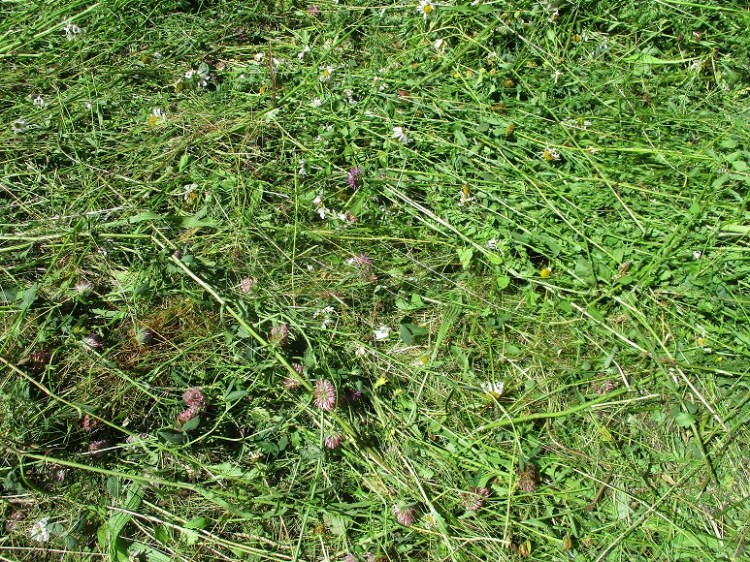
I didn’t.  Now the cut wildflower hay is laying in state for a couple of weeks, spread on the ground from whence it came.  This will allow the seed to ripen and spill on the earth, ensuring that the cycle continues.

Look out for a guest blog coming soon, all about meadows and the lovely like.

Invention

I may have said before (on several occasions) that my favourite gardener is/was the late, great, Geoffrey Hamilton.  He appeared as a gentle soul, he loved wildlife, promoted organic growing before many of the others caught on, and most charmingly, was a proud inventor.  Whether it was making cloches for a fraction of the price charged by retailers or making “rocks” out of tufa, he always had a cut price alternative to a problem.  He was a true man of the people.

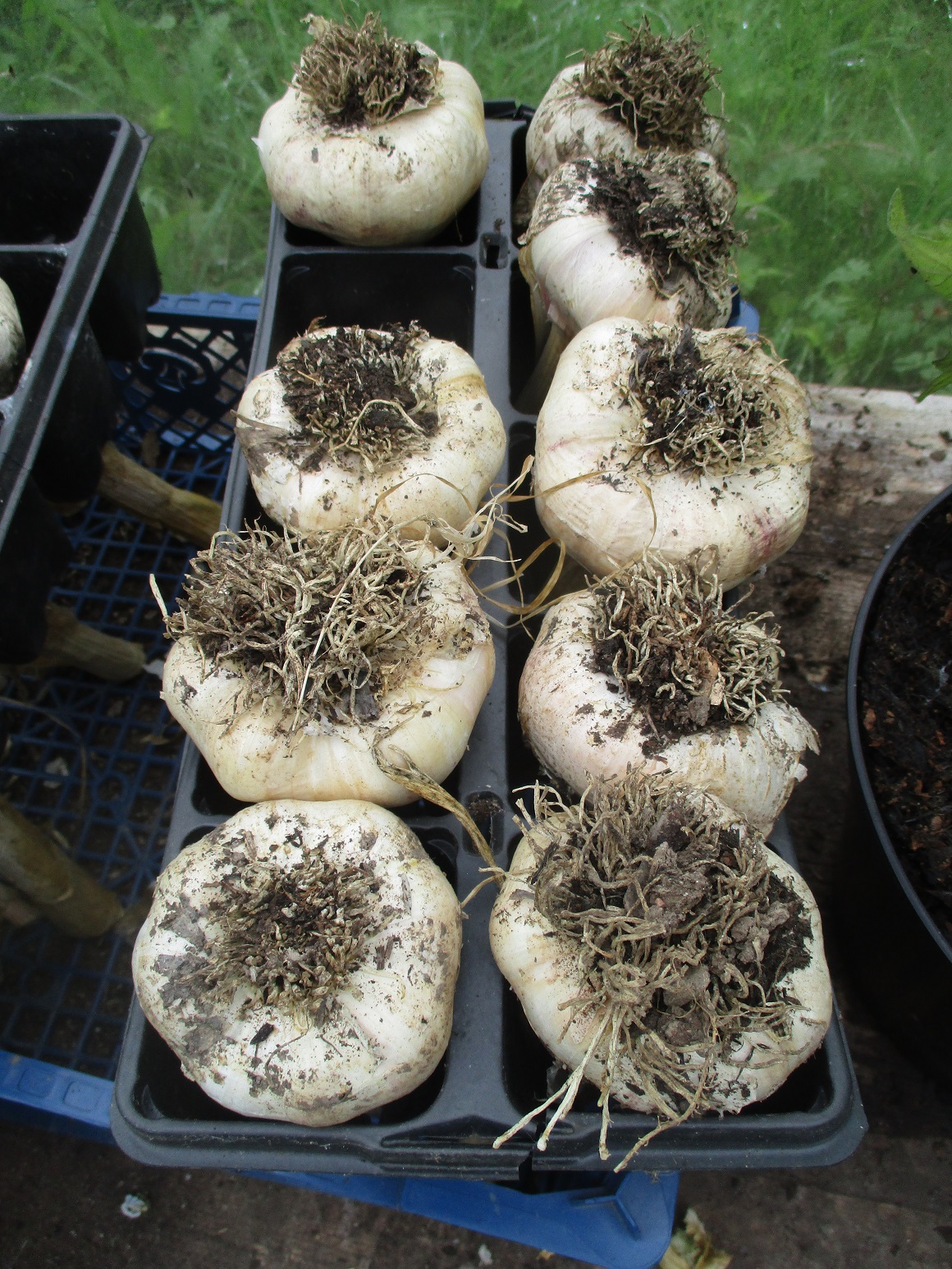
The garlic harvest at The Farm this year was very pleasing.  Champions one and all. They need to be fully cured before storing and the damp North Devon air was not assisting in the process.  So our our modern equivalent of Mr H, YMG, made holes in the bottom of past-it tenner’s and pushed the stems down through.  Here any moisture would drain downward, hastening the drying process.  Ingenious.  Yet again necessity is the mother of invention.  And all for nought.

Lack of Lilies

I was reminded the other day by my blogging friend, the indomitable Mr K at Rivendell Garden Blog , that I am sorely lacking in the lily department.  Quite why this has happened is puzzling.  The gardens that I work in all have them, many bought and planted by myself.  They do well in planters and I certainly am not shy about pot culture. I have even written about them for The Country Gardener magazine, extolling their virtues.  It certainly is a mystery.

As luck would have it a catalogue arrived yesterday, with pages and pages of glorious lilies for sale. Now I understand what the problem is.  I can never quite make my mind up which of  these beauties to grow.  Decisions, decisions ……

Land of the Giants

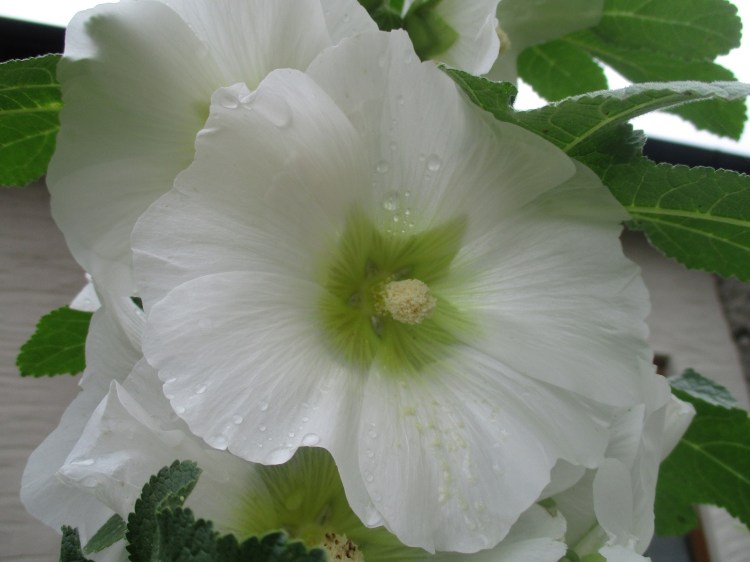
Alcea ficifolia

I’ve always loved stories that involve mini people living in the world of mega people.  These include Mary Norton’s classic The Borrowers and the 1960’s American TV series The Land of the Giants.  Giant safety pins as grappling hooks, sleeping in match boxes, finding enormous crisps to snack on and escaping from hungry cats (using aforementioned grappling hooks and elastic bands), all enchant.

Today at The Farm I thought I was at last living my dream.  I rounded the corner to find the Alcea ficifolia in full statuesque bloom, standing at least 2.5m tall.   The monstrous size of these fig leaved hollyhocks has been somewhat of a surprise, but I love them.  The spires, covered with saucer like blooms of palest yellow and white, both with a central grass green blotch, are a dramatic sight indeed.  Each time I spy them I smile, perhaps giggle a little.  Whether or not they suffer these wet winds is uncertain, but if they fall they may be of some use.  Perhaps some little folk will gather the flowers and make a flotilla of boats to sail away on the newly formed rivulets.